













Mycotoxins in Coffee: The Complete Guide to What They Are, How They Get There, and What Mold-Free Actually Means
Share
There is something in most commercial coffee that the bag won’t mention. It isn’t a pesticide residue or an artificial flavoring — it’s a family of compounds called mycotoxins, produced by mold that grows on coffee at various stages between the farm and your cup. Most coffee drinkers have never heard the word. The people who have often wish they hadn’t.
This article covers what mycotoxins are, how they end up in coffee, what the science suggests about their effects on health, and — most importantly — what the terms "mold-free" and "mycotoxin-free" actually mean when a coffee brand uses them, and what they don’t.
What Are Mycotoxins?
Mycotoxins are toxic compounds produced as secondary metabolites by certain species of mold and fungi. The word comes from the Greek mykes (fungus) and the Latin toxicum (poison). Unlike the mold itself — which may be visible on fruit or bread — mycotoxins are invisible, odorless, and tasteless. They can persist in a food product long after the mold that produced them has died or been removed.
Hundreds of mycotoxins have been identified. In the context of coffee, two are most relevant to human health:
Ochratoxin A (OTA) is produced primarily by Aspergillus ochraceus, Aspergillus carbonarius, and several Penicillium species. It is classified by the International Agency for Research on Cancer (IARC) as a Group 2B carcinogen — "possibly carcinogenic to humans" — and is recognized as a nephrotoxin, meaning it is toxic to the kidneys. It has also been studied in the context of immunosuppression and potential endocrine disruption. OTA is the mycotoxin most consistently found in commercial coffee, and it is the primary one tested for in any credible mold-free certification program.
Aflatoxin B1 (AFB1) is produced by Aspergillus flavus and Aspergillus parasiticus. It is classified as a Group 1 carcinogen by IARC — the highest risk classification, shared with tobacco smoke and asbestos — and is among the most potent naturally occurring carcinogens known. Aflatoxins are more commonly associated with peanuts, corn, and tree nuts, but have been documented in coffee, particularly in green (unroasted) beans from certain origins and storage conditions.
How Mycotoxins Get Into Coffee
Understanding the contamination pathway matters because it reveals why conventional quality control often fails to prevent it. Coffee passes through several stages between harvest and your cup, and mold can proliferate at multiple points.
At the Farm During Drying
After coffee cherries are harvested, the fruit must be dried — a process that can take one to six weeks depending on method, climate, and infrastructure. During this window, if humidity is too high, drying surfaces are contaminated, or cherries are piled too deep, fungal growth can begin before the beans are stable enough to be stored. This is especially common in regions with erratic weather patterns, limited mechanical drying infrastructure, or economic pressure to move product quickly.
During Storage and Milling
Once dried, green coffee is stored in warehouses — sometimes for months — before processing, export, and sale. Temperature and humidity fluctuations in storage create ideal conditions for mold. Coffee stored in traditional burlap bags in warm, humid environments is particularly vulnerable. Even when coffee is stored correctly at origin, conditions at intermediary warehouses — particularly in transit countries or at ports — can introduce or accelerate mold growth.
During Shipping and Transit
Green coffee is typically shipped in standard container vessels. Container shipping involves significant temperature and humidity variation as vessels cross climate zones. Condensation inside containers — sometimes called "container rain" — can introduce moisture to bags, initiating mold growth mid-transit. Specialty coffee buyers increasingly use GrainPro bags and climate-controlled containers to mitigate this, but it remains a risk in conventional supply chains.
After Roasting
High roasting temperatures do reduce mycotoxin levels — studies have documented reductions of 50% to over 90% for OTA during roasting, depending on roast level, bean density, and roast profile. However, the reduction is not complete, and the degree of reduction varies substantially across roasters, equipment, and methods. More critically: roasting does not eliminate mycotoxins that were present in high concentrations in the green bean. Reduction from high to moderate is not the same as clean.
What the Research Shows
The scientific literature on mycotoxins in coffee is substantial. Studies examining commercial coffee samples from various markets have consistently found OTA in a meaningful percentage of samples — with prevalence estimates in green bean samples ranging from approximately 30% to over 50% depending on origin and testing methodology. Roasted coffee shows lower rates, but positive results remain common. A 2003 European Food Safety Authority assessment identified coffee as a significant dietary contributor to OTA exposure for adults in EU member states.
The European Union has established maximum allowable levels of OTA in roasted coffee and soluble coffee (3 μg/kg and 10 μg/kg respectively as of current standards). The United States has not established specific federal limits for OTA in coffee, which means domestic products are not systematically tested or regulated for this particular compound.
What the research does not definitively establish is a precise threshold below which OTA in coffee becomes categorically safe — the relationship between OTA exposure from dietary sources, cumulative exposure, and specific health outcomes in humans remains an active area of study. What it does establish clearly: the compound is biologically active, nephrotoxic, potentially carcinogenic, and present in a significant fraction of commercial coffee at detectable levels.
For individuals who drink multiple cups of coffee per day — a population that includes most serious coffee drinkers — cumulative daily exposure from an untested product is meaningfully different from exposure from a product where the green lot has been tested and cleared.
Does "Organic" Mean Mold-Free?
No. This is one of the most important and most misunderstood distinctions in the clean coffee conversation.
Organic certification — whether USDA Organic, EU Organic, or a national equivalent — verifies that coffee was grown without synthetic pesticides, herbicides, or fertilizers. It says nothing about post-harvest handling, drying practices, storage conditions, or mold contamination. Organic coffee can be — and frequently is — contaminated with mycotoxins if it was improperly dried or stored. The certification addresses agricultural inputs; it has no bearing on fungal growth after harvest.
This means that a bag labeled "100% Organic" is not a mold-free claim. The two things are entirely separate quality dimensions. A coffee can be fully organic and heavily contaminated with OTA. It can also be non-organic and tested clean. The labels serve different purposes.
What this means practically: if your concern is mycotoxin exposure, organic certification provides no meaningful assurance. The only thing that provides assurance is actual testing.
What Does "Mold-Free Coffee" Actually Mean?
The phrase "mold-free coffee" has no regulated legal definition in the United States. Any company can use it. This is why the specifics of a brand’s testing program matter far more than the phrase itself.
When evaluating a mold-free claim, the questions that actually determine its credibility are:
Who is doing the testing? Third-party laboratory testing by an accredited, independent lab is meaningfully different from internal quality assessment. An in-house quality check is not the same as a certified third-party result. Look for named laboratories with verifiable credentials.
What are they testing for? At minimum, any credible mold-free program tests for Ochratoxin A. A more comprehensive protocol also includes Aflatoxin B1 and potentially a broader panel. A program that tests only for visible mold or general microbial presence is not an OTA test and should not be described as one.
At what stage is testing performed? Testing green (unroasted) coffee at the lot level is the highest standard — it catches contamination before it enters the roasting process. Testing roasted coffee is useful but incomplete, because roasting has already reduced whatever was present, making it harder to detect what the starting contamination level was.
How often is testing performed? Per-lot testing — meaning each harvest lot is tested individually before it is used — is the standard that provides the greatest assurance. Per-SKU testing (testing the final roasted product occasionally) is weaker. Annual or periodic testing provides limited assurance for a product being sold year-round.
Processing Methods and Mycotoxin Risk: Why It Matters How Your Coffee Was Handled
Not all coffee is processed the same way, and the method matters significantly for mycotoxin risk.
Washed (wet-processed) coffees — in which the fruit is removed from the bean mechanically before drying — tend to carry lower mycotoxin risk because the fermentation and washing steps can reduce fungal loads and the drying process begins on a cleaner surface. This is the dominant processing method in Colombia and most Central American countries, including Guatemala.
Natural (dry-processed) coffees — in which the whole cherry dries intact around the bean — carry higher inherent risk because the fruit provides both moisture and organic material for mold to grow on during the drying period. Natural processing produces distinctive fruity flavor characteristics that have become fashionable in specialty coffee, but the trade-off is a longer drying time in conditions that require meticulous management to avoid mold development.
Wet-hulled Sumatran coffees are processed using a method unique to Indonesia, in which the parchment is removed while the bean is still at elevated moisture content — a practical adaptation to the humid climate that makes full drying difficult. This method produces the earthy, full-bodied flavor profile characteristic of Sumatran coffee, but the high moisture content during processing creates a window of mycotoxin risk that requires careful monitoring and rapid drying after hulling.
The takeaway is not that any single processing method is inherently unsafe — all three can yield clean coffee when handled properly. Rather, it reinforces that the supply chain matters enormously, and that direct trade relationships with producers who prioritize meticulous post-harvest practices are a meaningful part of mycotoxin risk management — even before testing enters the picture.
Testing confirms. Good sourcing practice reduces the probability that contamination will be found. Both matter.
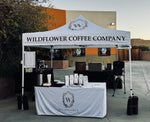
How Wildflower Coffee Tests
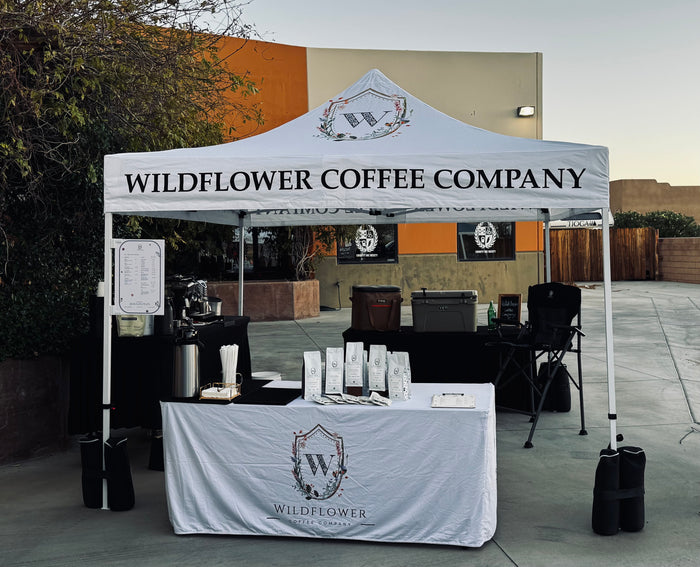
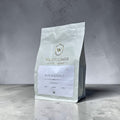
Wildflower Coffee Company sends samples from each incoming harvest lot to Alfa Chemistry, an independent third-party laboratory based in New York, NY, for mycotoxin analysis prior to use. Each lot is tested individually. The test covers Ochratoxin A and the broader mycotoxin panel relevant to coffee.
Lots that do not pass testing are not used. The testing is not performed in-house, and it is not performed by anyone with a commercial interest in the result.
Wildflower is also USDA Certified Organic — but the two things are separate. The organic certification speaks to how the coffee was grown. The third-party lab testing speaks to what is and isn’t in it.
How to Evaluate Any Coffee Brand’s Mold-Free Claims
Applying the framework above, here is a practical checklist for any brand making mold-free or mycotoxin-free claims:
Ask for the lab name. A credible mold-free program has a named, verifiable third-party lab. "We test for mold" without naming the testing entity is not a testable claim.
Ask what specific compounds are tested. "We test for mold" and "We test for Ochratoxin A" are not the same statement. The former might mean general microbial testing. Only the latter is meaningful for the mycotoxin question.
Ask whether testing is per lot or periodic. Per-lot green bean testing is the highest standard. Anything less — testing one batch per year, or testing only finished product — provides weaker assurance.
Look for transparency, not just claims. Brands that are genuinely confident in their testing results tend to be specific about it. Vague language ("we take quality seriously") without supporting detail is a yellow flag.
Frequently Asked Questions
Does roasting kill mycotoxins?
Roasting significantly reduces OTA levels in coffee — studies suggest reductions of 50–90% depending on roast temperature and duration. However, it does not eliminate mycotoxins entirely, and the reduction from high contamination to moderate contamination is not equivalent to a clean result. Testing green beans before roasting is the correct control point.
Is mold-free coffee the same as low-acid coffee?
No. Acidity in coffee is primarily determined by chlorogenic acids and roast level, not mold contamination. A dark roast may be lower-acid and still contaminated. A light roast may be higher-acid and completely clean. The two characteristics are independent of each other.
Are single-origin coffees safer from mycotoxin contamination?
Not inherently. Single-origin coffees can be grown and processed with better traceability and care — but origin alone does not determine contamination status. A traceable, direct-trade relationship with a producer who follows rigorous drying and storage protocols does reduce risk. But the only definitive verification is testing.
Can I taste or smell mycotoxins in coffee?
No. Mycotoxins are colorless, odorless, and tasteless at the concentrations relevant to food safety. A cup that tastes clean and smells clean may or may not be clean. This is precisely what makes independent testing the only reliable verification method.
Should I be concerned about mycotoxins in decaf?
Decaffeination occurs after roasting or on green beans, and most common methods (CO₂, Swiss Water, ethyl acetate) do not specifically target or eliminate mycotoxins. If mycotoxin exposure is a concern for you, the testing standard for decaf should be the same as for regular coffee.
Are there other foods I should worry about?
Yes. Mycotoxins are present across many agricultural commodities — peanuts, corn, tree nuts, grains, dried fruits, and certain spices are among the most well-documented. Coffee is notable among them because it is consumed daily in large quantities by a significant portion of the population, making cumulative exposure a relevant consideration.
The Honest Summary
Mycotoxins in coffee are not a fringe concern invented by wellness marketers. They are a documented, studied reality — acknowledged by regulators in Europe and researched by food safety scientists worldwide. The fact that the U.S. has not set specific federal limits does not mean the compounds are harmless; it means they are unregulated.
For most people, exposure from a single cup of conventional coffee is unlikely to cause acute harm. The concern is cumulative: a daily habit over years, compounded by mycotoxin exposure from other dietary sources. For people managing kidney conditions, immune conditions, hormonal issues, or inflammatory conditions, even that framing may be worth taking more seriously.
What a thoughtful coffee buyer can do is straightforward: choose brands that test, verify the specifics of the testing, and don’t accept vague claims as a substitute for verifiable evidence. The test results exist or they don’t. The lab name is named or it isn’t. The answer to "which lot?" is specific or it’s evasive.
Your morning coffee can be something you feel good about — not because you’ve been reassured by marketing language, but because someone actually checked.