









The Complete Pour-Over Guide: How to Brew Coffee That Tastes Like It Cost Four Times More
Share
In This Article
Pour-over coffee is not a trend. It is the most direct path between a great bean and a great cup — a method that strips away complexity and gives you unmediated access to everything the roaster and farmer worked to create.
It is also the brewing method most likely to reveal what you’ve been missing. A cup of freshly roasted, single-origin coffee brewed with a proper pour-over setup is a categorically different experience from what most people have associated with “coffee.” Not better in a subjective sense. Better in a quantifiable, immediately perceptible, this-is-what-it’s-supposed-to-taste-like sense.
Here is the complete guide. (Also worth reading: the five brewing mistakes that prevent most people from getting there.)
What You Need
You do not need expensive equipment to brew excellent pour-over. You do need the right equipment.
A pour-over dripper. The Hario V60 is the standard for a reason: the spiral ribs and wide opening give you maximum control over extraction. The Kalita Wave provides a flatter bed and more forgiving extraction for beginner pourers. Either is excellent. Avoid plastic drippers — ceramic retains heat better and doesn’t impart flavor.
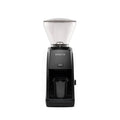
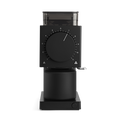
A burr grinder. This is the single most important piece of equipment in any home coffee setup. A blade grinder produces inconsistent particle sizes that brew at different rates, creating a cup that is simultaneously over- and under-extracted. A burr grinder produces a consistent grind that extracts evenly. The Baratza Encore is the standard entry-level recommendation for excellent reason.
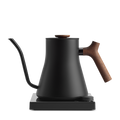
A gooseneck kettle. The narrow spout gives you control over flow rate and pour placement that a standard kettle cannot provide. Temperature control (the Fellow Stagg EKG is best in class) is worth the investment, but any gooseneck dramatically improves results.
A digital scale. Coffee is ratios. Measuring by volume produces inconsistent results because coffee density varies significantly between roast levels and origins. Weighing gives you precision and repeatability.
The Fundamentals: Ratio, Temperature, Grind
Ratio. Start at 1:15 — one gram of coffee to 15 grams of water. For a 300ml cup, use 20 grams of coffee and 300 grams of water. Adjust to taste: 1:14 is stronger; 1:16 is lighter.
Temperature. 200°F (93°C) is the standard for most medium and medium-dark roasts. Light roasts often benefit from 200°F–205°F. Dark roasts can be brewed slightly lower (195°F–200°F) to avoid bitterness. Without a temperature-controlled kettle, let boiling water rest for 30–45 seconds.
Grind size. For pour-over, aim for medium-fine — roughly the consistency of table salt, or slightly coarser. If your cup tastes sour and thin, grind finer. If it tastes bitter and heavy, grind coarser. You can find a deeper explanation of these terms in our specialty coffee glossary.
The best pour-over starts with the best raw material.
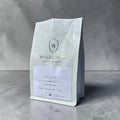
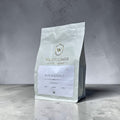
May Flower is a clean, bright Colombian single origin that expresses the full range of pour-over’s potential — roasted to order, mold-free certified, shipped within days.
Shop May Flower →Step-by-Step: The Brew
Step 1: Grind immediately before brewing. This is not a preference — it is the single most significant quality variable after bean quality. Ground coffee loses aromatic compounds rapidly. See our full breakdown of why pre-ground coffee is the most common brewing mistake.
Step 2: Rinse and preheat. Place your filter in the dripper, set over your mug or carafe. Pour hot water through the filter to rinse, then discard. This preheats everything and eliminates the papery filter taste.
Step 3: Bloom. Add your ground coffee and create a small well in the center. Pour approximately twice the weight of the coffee in water — for 20 grams of coffee, pour 40 grams of water. Saturate all grounds and wait 30–45 seconds. The bloom is the CO2 release from fresh coffee — the more dramatic the bloom, the fresher the coffee. No bloom means the coffee is old.
Step 4: Pour. Begin your main pour slowly in a controlled spiral, starting in the center and moving outward. Total brew time should be 3–4 minutes. Faster produces under-extracted coffee; slower produces over-extraction.
Step 5: Taste and adjust. Change one variable at a time. Change grind size first — it has the most immediate impact. Then temperature. Then pour speed. Keep notes.
What to Expect From Freshly Roasted Coffee
If you’re brewing roasted-to-order Wildflower coffee within the first two weeks of roast, you will notice two things: the bloom will be dramatic, and the flavor will be bright, nuanced, and front-loaded with aromatics. Let the coffee rest 4–7 days post-roast for optimal extraction. Store in the original bag at room temperature, away from light. Do not refrigerate whole beans — the condensation cycle damages the aromatic compounds that make specialty coffee worth drinking.
The Cup That Changes Everything
Most people’s reference point for coffee is set by the grocery store bag opened months after roasting, brewed in a drip machine at the wrong temperature, with pre-ground beans that have been sitting in a jar. A properly brewed cup of freshly roasted Wildflower May Flower or Wild Orchid Sumatran changes that reference point in a way that is difficult to undo. This is what specialty coffee actually means in your cup.
Frequently Asked Questions
What is pour-over coffee?
Pour-over coffee is a manual brewing method where hot water is poured gradually over coffee grounds held in a paper or metal filter above a vessel. The water passes through the grounds and filter by gravity, extracting soluble compounds into the cup. It is the method that gives the brewer the most control over extraction variables — flow rate, water temperature, pour pattern — and produces the clearest expression of a single-origin coffee’s character.
What is the best coffee for pour-over?
Light to medium roasts from clearly defined single origins work best for pour-over — the clean extraction reveals terroir and varietal character that would be obscured in an espresso or dark-roast preparation. Wildflower’s May Flower (Colombia Tolima) and Morning Bloom (Colombian) are ideal pour-over coffees: bright, traceable, and — because they’re roasted to order — at peak freshness when they arrive.
How much coffee should I use for pour-over?
The standard starting ratio is 1:15 — one gram of coffee per 15 grams of water. For a standard 300ml cup (approximately 10 oz), use 20 grams of ground coffee and 300 grams of water. Adjust toward 1:14 for a stronger cup or 1:16 for something lighter. Always measure by weight, not volume — coffee density varies significantly by roast level.
Why does my pour-over taste bitter?
Bitterness in pour-over is almost always caused by over-extraction: too fine a grind, too hot a water temperature, or too slow a pour that extends contact time beyond the ideal 3–4 minute window. Try coarsening your grind first — it’s the most impactful single change. If bitterness persists, lower your water temperature by 5 degrees. For a full diagnostic guide, see our five common brewing mistakes article.
What is the bloom in pour-over coffee?
The bloom is the initial pour of a small amount of water — typically twice the weight of the coffee grounds — that saturates the grounds and allows CO2 trapped during roasting to escape before the main extraction begins. The bloom phase typically lasts 30–45 seconds. A vigorous bloom (with visible bubbling and grounds rising into a dome) indicates fresh coffee. No bloom indicates the CO2 has already off-gassed — meaning the coffee is old and the protective aromatic window has closed.
Keep Reading
Great technique deserves great beans.
May Flower is roasted to order, mold-free certified, and sourced directly from ASOPEP in Colombia’s Tolima region. The ideal pour-over coffee, at its peak when it arrives.
Shop May Flower →